How to measure for drawer slides: length, width and load
Ordering the wrong slide length is the most common drawer mistake, and it is easy to avoid. Measure two things inside the cabinet, depth and width, decide the slide type and the load, and the order follows. Worked examples below use WEITE ball-bearing and undermount slides.
Short answer
- Slide length = inside depth of the cabinet minus about 10 mm, rounded down to the nearest standard length.
- Drawer width, undermount (WEITE 7002, 7003, 7010): outside width of the drawer = inside width of the cabinet minus 26 mm, with 16 or 18 mm drawer sides.
- Drawer width, side-mount ball-bearing: leave room for one slide on each side; most 45 mm ball-bearing slides need 12.7 mm per side. Check the drawing on the model page.
In this guide
1. Pick the slide type
The type changes how you measure, so decide it first.
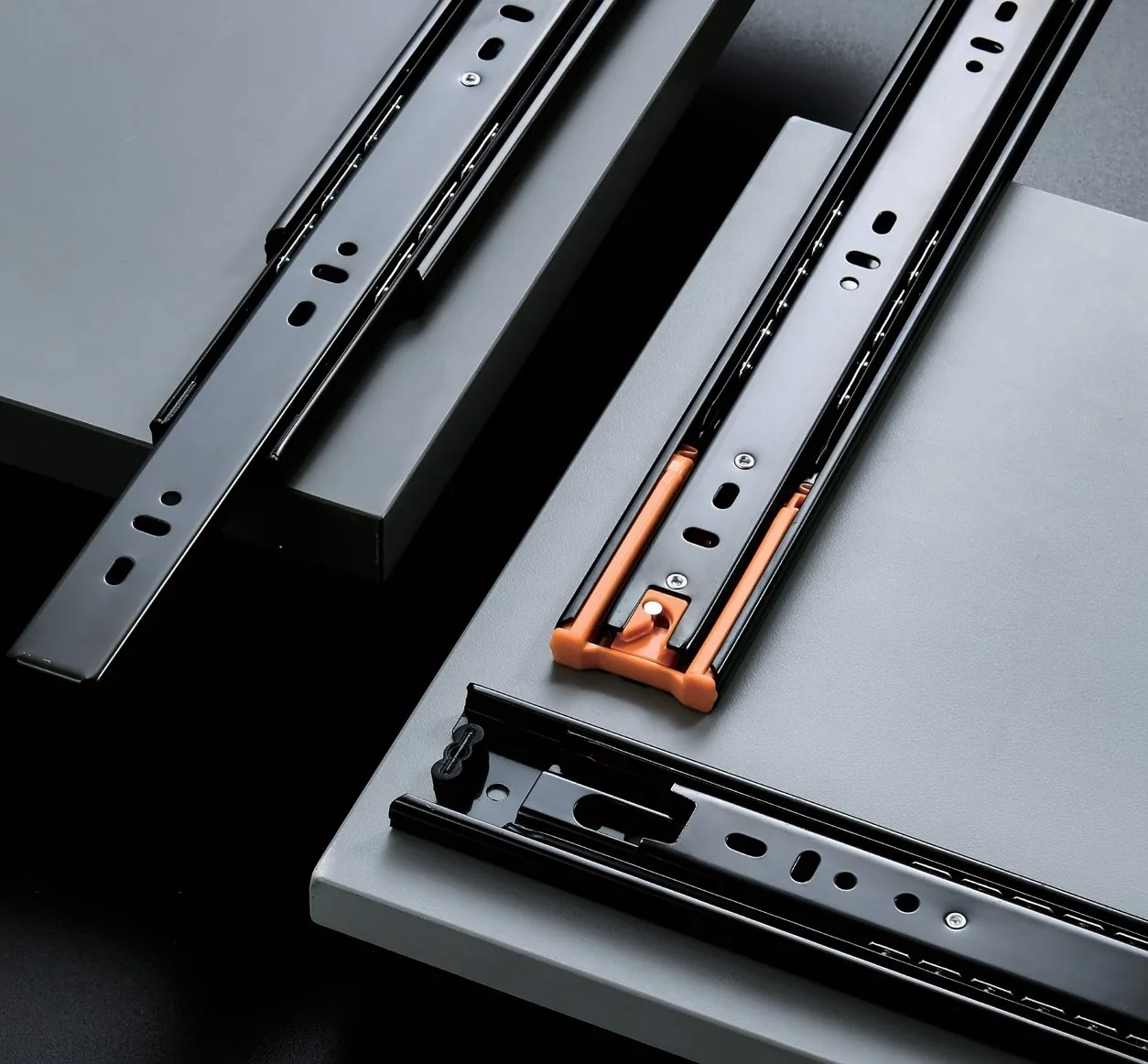
- Side-mount ball-bearing slides screw to the side of the drawer and the cabinet wall. WEITE's are three-section, full extension and 45 mm tall. They are visible when the drawer is open and are the economical choice for most kitchen and wardrobe drawers. Example: 7001 soft-close.
- Undermount concealed slides sit under the drawer bottom and hook onto the drawer sides, so nothing shows when the drawer opens. WEITE's are synchronised: a bar links both sides so the drawer runs straight even when pushed from one corner. Example: 7002 soft-close.
2. Measure for length
Measure the inside depth of the cabinet, from the inside of the front edge to the back panel, at the height where the drawer will sit. Subtract about 10 mm and take the longest standard slide that fits. WEITE ball-bearing slides come in 200 to 500 mm in 50 mm steps; the 7002 and 7003 undermount slides in 250 to 550 mm. The drawing on each model page gives the minimum cabinet depth for each length; a 500 mm slide needs at least 504 mm.
| Inside cabinet depth | Minus about 10 mm | Order |
|---|---|---|
| 470 mm | 460 mm | 450 mm slide |
| 520 mm | 510 mm | 500 mm slide |
| 560 mm | 550 mm | 550 mm undermount slide (7002, 7003) |
Full extension means the drawer comes out its whole length, so a longer slide gives a deeper usable drawer. There is no benefit in going shorter than the cabinet allows.
3. Work out drawer width
Undermount slides
For WEITE 7002, 7003 and 7010 slides the outside width of the drawer box is the inside width of the cabinet minus 26 mm. The slides are made for 16 or 18 mm drawer sides. Example: a 564 mm inside cabinet width gives a 538 mm drawer box. The drawer bottom and back need the notches and recess shown on the model drawing so the slide can hook on.
Side-mount ball-bearing slides
The slide sits in the gap between drawer and cabinet wall, one on each side. Most 45 mm ball-bearing slides need 12.7 mm (half an inch) per side, so the drawer box is about 25.4 mm narrower than the opening. Too tight and the drawer binds; too loose and the slides will not engage. Confirm the clearance on the model drawing before cutting a production run.
4. Choose the load class
Steel thickness sets the load. Pick by what the drawer will hold when full, not by the empty drawer.
| Use | WEITE slide | Steel | Load per pair |
|---|---|---|---|
| Cutlery, linen, light wardrobe drawers | 7007 | 0.8 / 1.0 / 1.0 mm | 25 kg |
| Pots, plates, most kitchen drawers | 7008, 7001, 7024 | 1.0 / 1.0 / 1.2 mm | 30 to 35 kg |
| Tools, bottles, heavy files | 7015 | 1.2 / 1.2 / 1.5 mm | 40 kg |
| Concealed, soft-close or push-open | 7002, 7003, 7010 | 1.8 / 1.5 / 1.0 mm | 35 kg |
| Stair cabinets and tall larder pull-outs | 7451 | 2.0 mm throughout | 120 kg |
The 7451 is the slide for drawers deeper than 500 mm and for tall units: extension up to 1250 mm, for cabinets up to 2 m high and 400 to 600 mm wide.
5. Mistakes to avoid
- Measuring the outside of the cabinet. Always measure inside, between the front edge and the back panel.
- Forgetting what sits behind the cabinet. Pipes, sockets or a recessed back panel shorten the usable depth.
- Mixing push-open and soft-close. A push latch on a drawer with soft-close slides fights the damper. For handle-less drawers use push-open slides such as the 7009 or 7003.
- Ordering pieces instead of pairs. Slides are sold in pairs, one per side. WEITE packs 15 pairs per carton for ball-bearing slides and 10 pairs for undermount slides.
Questions buyers ask
How do I know what length drawer slide I need?
Measure the inside depth of the cabinet, subtract about 10 mm and take the longest standard length that fits. A 500 mm slide needs at least 504 mm of cabinet depth.
How much narrower than the cabinet should the drawer be for undermount slides?
For WEITE 7002, 7003 and 7010 undermount slides, the drawer box is 26 mm narrower than the inside of the cabinet, with 16 or 18 mm drawer sides.
How much clearance do ball-bearing drawer slides need?
Most 45 mm ball-bearing slides need 12.7 mm on each side, about 25.4 mm in total. Check the drawing on the model page for the exact figure.
What is the difference between the 7001 and 7024 slides?
Both are 1.2 mm soft-close ball-bearing slides. The 7001 uses a single closing spring; the 7024 uses two, which pulls heavier drawers shut more firmly.
Can I use one slide for very deep or heavy drawers?
For drawers over 500 mm deep or very heavy loads use a heavy-duty slide such as the 7451, rated 120 kg per pair with extension up to 1250 mm.
Need slides in volume?
Ball-bearing and undermount slides in 200 to 550 mm, tested to 50,000 open-close cycles. One carton per length is the minimum, and lengths mix freely in one order.